


How open APIs future-proof your auction business
April 23, 2026
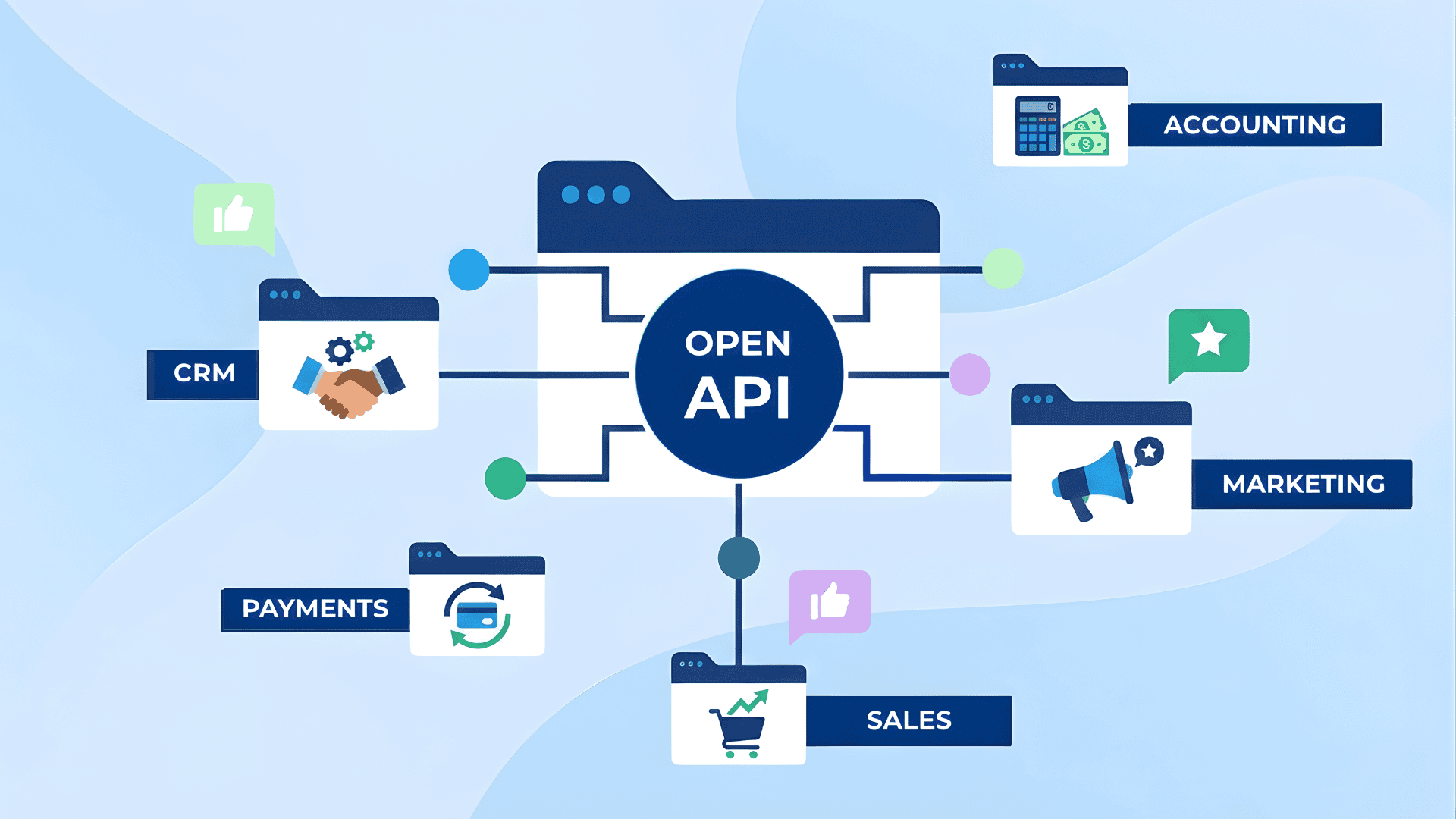
Open APIs help auction houses stay flexible as buyer expectations, channels and software needs change. In practice, they make it easier to connect auction management, payments, accounting, marketing and bidding platforms, so the business can modernise one part of its operation without replacing everything at once. That means less manual rework, lower integration friction and more room to grow with confidence.
Future-proofing your auction business is not about predicting every change in the market. It’s about building an operation that can adapt when change arrives. That matters now because the auction sector is moving again. The Art Basel & UBS Art Market Report 20261 shows that auction market sales returned to growth in 2025, with combined public and private sales rising 6% to $24.8 billion, while public auction sales increased 9%. Digital channels are firmly embedded in how the market works, with online-only sales still accounting for 15% of total art market sales, above pre-pandemic levels. Sotheby’s latest research2 reinforces the same picture: a more selective, quality-driven market, but one with renewed confidence, improving liquidity and stronger sell-through. In that environment, future-proofing is about building the flexibility to respond as the market develops.
That is where open APIs become commercially important.
They are not a trend piece or a technical extra, but one of the clearest ways to make sure an auction house can evolve without creating more operational drag.
What open APIs mean in an auction house
An API, or application programming interface, is a set of rules that allows software applications to communicate with each other. In simple terms, open APIs allow different software systems to exchange data and trigger actions automatically. For an auction business, that could mean synchronising auction management software with eCommerce payment platforms, accounting software, inventory, external marketing automation, CRM, marketplace platforms or private bidding tools.
The strategic value is straightforward: when systems can exchange data cleanly, the business becomes easier to adapt. New partners can be connected faster. Existing tools can be replaced with less disruption. Data can move where it is needed without teams copying it manually from one platform to another.
That matters because most auction houses do not operate through one tool alone. They rely on a stack of systems that supports inventory, vendors, buyers, payments, marketing and reporting. If those systems do not connect properly, growth becomes harder than it needs to be.
Why fragmented systems become a growth problem
Many businesses don’t feel the cost of fragmented systems all at once. They feel it gradually: duplicate entry, inconsistent records, delayed reporting, manual reconciliation and teams spending time moving information between different tools rather than using it.
McKinsey notes that fragmented data repositories can consume 15% to 20% of the average IT budget and create validation headaches, lost time and higher risk of error3. The same research argues that wider use of APIs can put data buried in legacy systems to work without expensive custom workflows. That is an important point for auction houses. The issue isn’t simply whether a system works today; it is whether it makes tomorrow’s change unnecessarily costly.
This is why open APIs are about resilience as much as efficiency. They help businesses reduce dependency on manual workarounds and make change less disruptive when new requirements emerge.
How open APIs future-proof the business
The first benefit is flexibility.
An auction business should be able to add or change a payments provider, connect a different accounting package, introduce new marketing automation or syndicate inventory to additional bidding platforms without rebuilding its whole operating model. Open APIs reduce the switching cost of those decisions and make it easier to modernise one layer of the business at a time. McKinsey’s research on APIs makes the same point in broader terms: APIs reduce IT complexity, improve agility and support reusable, modular functions that can be delivered faster.
The second benefit is speed.
McKinsey also found that almost half of respondents in its API survey expected API efforts to reduce costs by more than 10%, while nearly a third expected revenue gains of more than 10%. The context was banking, but the management lesson is relevant well beyond financial services: when systems are easier to connect, organisations move faster, reduce repetitive work and create more room for new services and commercial opportunities.
The third benefit is consistency.
When data lives across disconnected systems, management slows down. Customer journeys become harder to manage, reporting becomes less reliable and operational changes take longer to implement. Open APIs help preserve continuity by allowing information to flow more consistently across the business. In a sector where client experience, operational accuracy and speed increasingly differentiate one auction house from another, that continuity matters.
Why this matters for auction software selection
This is one reason auction houses should look beyond feature lists when assessing software. A platform may look capable in isolation and still create long-term constraints if it cannot exchange data cleanly with the rest of the business.
Artisio’s approach is built around that principle. Artisio is 100% API-based, with full data exchange capabilities via API. In practical terms, that means functionality and data held within Artisio can be synchronised with third-party software partners that support APIs, including payment platforms, accounting software, external marketing automation, marketplace platforms and private bidding platforms.
An auction business doesn’t need to choose between operational control today and flexibility tomorrow, as Artisio can give you both.
For smaller auction houses, that can mean avoiding lock-in and keeping the business agile as it grows. For larger operations, it allows coordinating multiple partners, systems and workflows without losing control of data or creating additional admin.
The management question worth asking now
The most useful question for an auction-house owner or director is whether the business can adapt when it needs a new tool, a new channel, a new partner or a new workflow. That is the real test of future-proofing.
Open APIs don’t remove every future challenge, but they make change easier to manage. They reduce the need for manual workarounds, lower integration friction and help businesses modernise without turning every upgrade into a costly replacement cycle. In a market shaped by digital selling, rising expectations and constant pressure to do more with less, that flexibility is not a technical detail. It is a strategic advantage.
Sources:
1 The Art Basel & UBS Art Market Report 2026
2 Sotheby’s Insight Report | The Art Market Beyond $1 Million 2025
3 McKinsey & Company, APIs in banking: From tech essential to business priority
4 McKinsey & Company, Reducing data costs without jeopardizing growth
Frequently asked questions
What is an open API in auction software?
An open API allows auction software to exchange data with other systems automatically. For auction houses, that can include payments, accounting, marketing automation, marketplaces and private bidding platforms.
Why do open APIs matter for auction houses?
They make it easier to connect the systems an auction house already uses, reduce manual rework and allow the business to adapt without replacing its whole software stack.
How do open APIs help future-proof an auction business?
They lower the cost and disruption of change. That makes it easier to introduce new partners, channels and tools while keeping data connected and workflows efficient.
